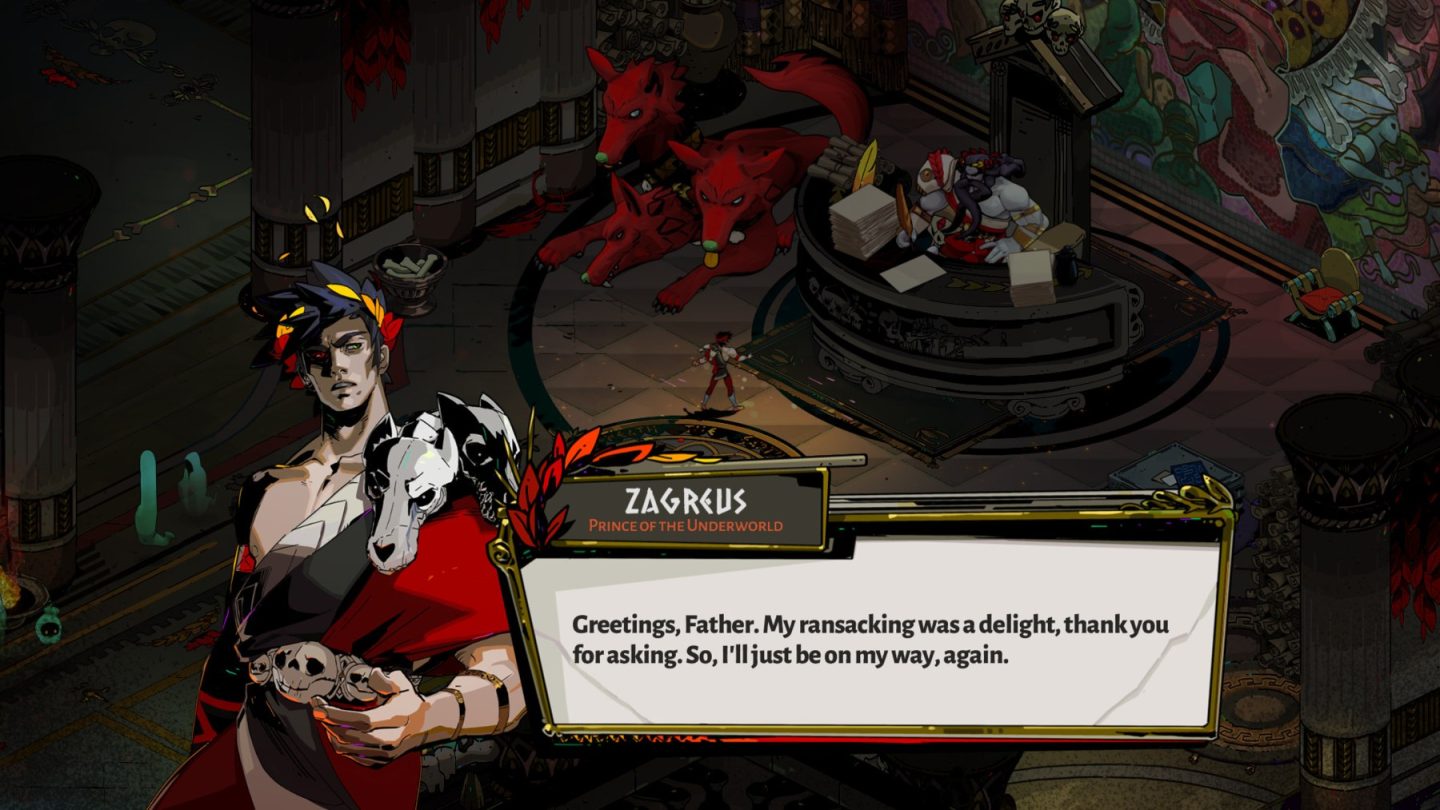
Your first escape in Hades is easier to approach as a sequence of decisions than as a search for one unbeatable combination. You cannot control every reward that appears, but you can improve how you spend health, choose upgrades and react to unfamiliar attacks. This guide focuses on the original Hades. Hades II has different systems and should not be treated as interchangeable advice for the same game.
Begin with a manageable objective: reach the next unfamiliar encounter with enough health to learn it. A run that ends after revealing an attack pattern can still improve the next attempt. That does not mean every loss feels good. It means you should separate information gained from rewards collected. Both forms of progress matter, and neither requires a flawless first hour.
1. Choose a weapon you can read under pressure
Test each available weapon in the practice area before judging its damage potential. Look at reach, recovery time and how easily you can attack while maintaining a safe position. A weapon that feels impressive against a stationary target may be harder to use when several enemies are moving. Your first useful choice is the weapon whose basic actions remain understandable during a crowded fight.
For an early learning run, concentrate on a small set of reliable actions. Know what your attack does, what your special does and how the cast fits between them. Do not force every action into every encounter simply because it exists. Build familiarity first. Once you can recognize a safe opening, adding another tool becomes a meaningful choice rather than another source of hesitation.
2. Make movement your default defensive tool
Many avoidable hits happen after a successful attack because you remain beside the target too long. Practice a rhythm of entering, attacking briefly and leaving. Move with a destination in mind. Repeated dashing without looking can carry you into a trap or another enemy's attack. Before committing, identify the space you want to occupy after your damage window closes.
At the start of an unfamiliar chamber, take a moment to identify ranged threats, hazards and useful cover. Fight where the layout helps you. If an enemy is approaching through a narrow route, you may not need to rush forward to meet it. A controlled position can be worth more than a few additional attacks, especially when preserving health is the run's immediate priority.
3. Give your build one clear job
Early rewards can tempt you into collecting several attractive but disconnected effects. Instead, decide which action will carry most of your damage. Is this an attack-focused run, a special-focused run or a cast-led approach? Choose upgrades that strengthen that plan when the options support it. Coherence makes a modest collection of rewards easier to use than a powerful-looking set with no shared purpose.
Read the complete wording of a boon before selecting it. Consider what must happen for its benefit to apply. A strong effect that depends on an action you rarely use may contribute less than a simpler improvement to your main attack. Likewise, a defensive option can be the best damage decision if it keeps you alive long enough to finish the encounter. Evaluate the whole run rather than one displayed number.
4. Treat health as a resource with a purpose
You do not need to avoid all risk. You need a reason for taking it. Accepting some danger to remove a troublesome ranged enemy may be sensible; standing in a telegraphed attack to finish a minor target usually is not. Ask whether the health spent changes the fight meaningfully. This turns survival from vague caution into a series of understandable trade-offs.
At reward choices, compare your present condition with the next challenge. A struggling run may benefit from health or a defensive improvement more than another small offensive increase. A healthy, coherent build may be ready to invest in damage. There is no universal reward order that ignores your current situation. The most reliable choice is the one that solves the problem the run actually has.
5. Use the Mirror deliberately between attempts
The Mirror provides persistent development, so review it when you return rather than immediately starting another escape. Invest in benefits that support the problems you keep encountering. If survival is consistently the obstacle, prioritize available survival-oriented options before pursuing a specialized damage plan. Read how the selected talent works and remember that paired alternatives are choices, not benefits that automatically operate together.
Avoid treating an online endgame allocation as a mandatory beginner shopping list. Your available resources and unlocks will differ. Upgrade costs and progression stages also make a perfectly optimized later setup an unhelpful immediate goal. Spend with a short explanation in mind: this purchase should help me survive a mistake, recover resources or make my main attack more dependable. If you cannot explain the benefit, pause before committing.
6. Learn bosses in short information-gathering phases
During an unfamiliar boss encounter, begin by observing one complete attack sequence. Watch the preparation, the dangerous moment and the recovery. The recovery is often your safest opportunity to deal damage. When the pattern changes, briefly return to observation rather than assuming your previous timing still applies. A phase transition is information, even if the arena becomes visually busy.
After a failed attempt, record one specific adjustment. Examples include leaving the centre earlier, attacking once instead of twice, or clearing an additional enemy before returning to the boss. A specific correction is more useful than a general promise to play better. If you keep losing at the same point, the next run can be successful by making that single section more controlled, even before the entire escape is complete.
7. Prepare for the final part of the run
As you reach later areas, compare your remaining resources with the demands you have already observed. Keep an eye on healing opportunities and the state of your recovery options. A build can look excellent on paper while arriving too depleted to function. Sometimes the right adjustment is to make earlier chambers less costly rather than to search for a different final upgrade.
Before a major encounter, take a short break from making inputs. Check your core actions and any conditional bonuses you intend to use. Re-enter with one simple combat plan. A complicated rotation that you cannot perform while watching enemy tells is less useful than a slightly less efficient sequence you can execute consistently. Reliability is a form of power, especially during a first clear.
8. Know when to use additional support
Hades includes God Mode as an optional way to adjust the experience. If repeated attempts have stopped producing useful learning, consider whether that support would make the process more enjoyable. It is an option provided by the game, not a failure of understanding. Check its description in your installed version and decide whether it fits the experience you want.
Also consider the less visible adjustments: shorter sessions, a different input layout or a weapon with a clearer range. Fatigue can turn a readable encounter into a blur of reactions. Another immediate attempt is not automatically better practice. Sometimes the most productive next step is to return with enough attention to notice the opening you have already learned exists.
A compact checklist before the next escape
- Pick a weapon whose movement and range feel predictable.
- Name the action that will carry your build's damage.
- Preserve a safe destination after each attack sequence.
- Choose rewards that address your present weakness.
- Observe a new boss pattern before forcing damage.
- Bring one specific lesson into the following run.
The goal is not to eliminate uncertainty. Hades is built around adapting to it. You are creating a method that remains useful when the reward sequence changes. Read our full Hades review for a broader assessment of the design, or our essay on productive failure for the learning principles behind this approach. Core systems and available weapons are described on Supergiant's official Hades page.

What is your perspective?
Share a useful observation. Keep spoilers clearly signposted and follow our community guidelines.