Failure is often described as the defining feature of a roguelike or a run-based action game. That description is incomplete. Losing is not automatically interesting, and repetition does not automatically produce mastery. The more useful question is what remains after a failed attempt: information, a new possibility, a change in perspective or simply a demand to repeat the same work. The quality of that remainder shapes the experience.
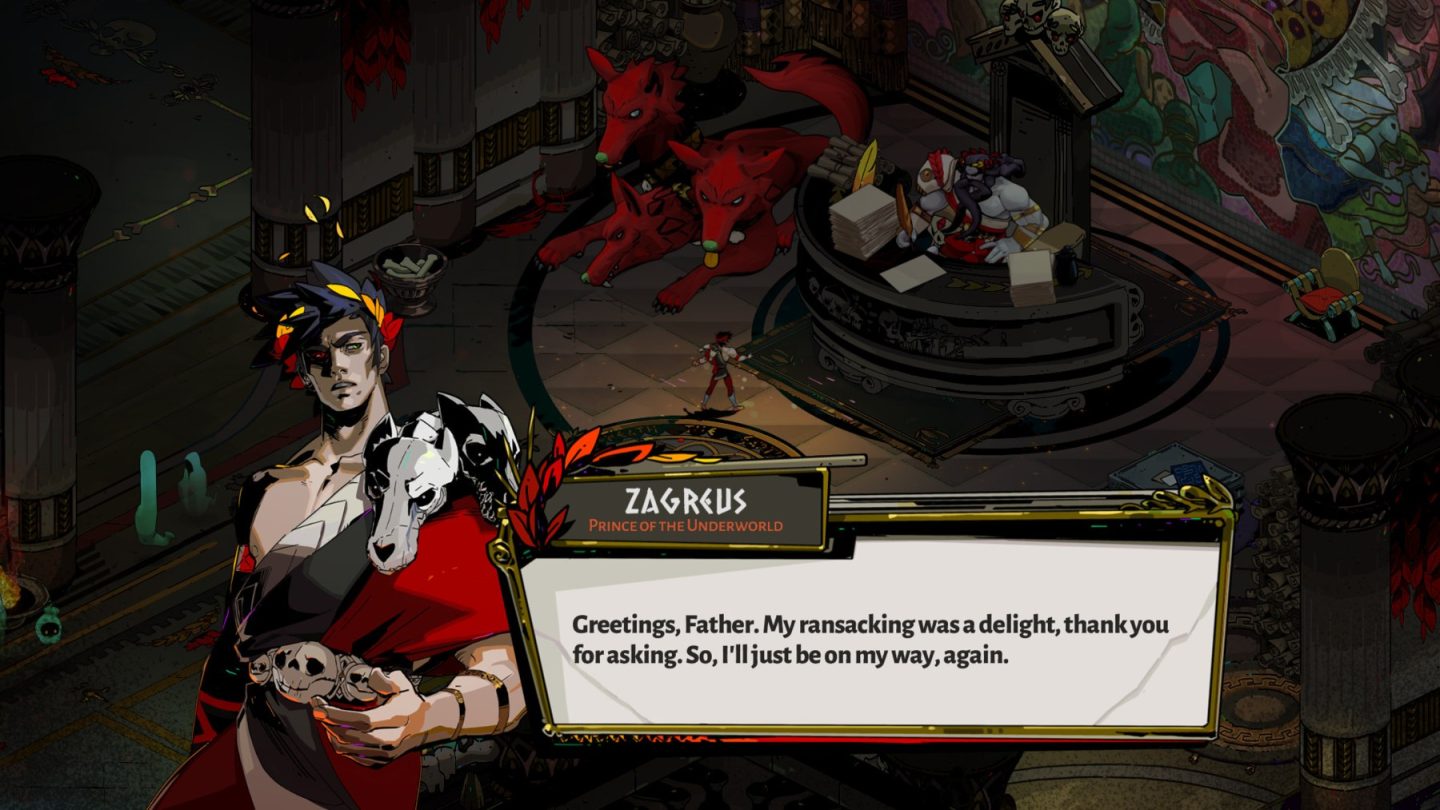
Hades offers a particularly clear example because its repeated attempts connect combat learning with a continuing social and narrative structure. It does not remove the disappointment of a failed escape. It gives that disappointment somewhere to go. Returning can reveal dialogue, development and a reason to choose differently next time. Failure remains a setback, but it is not treated as an empty interval outside the game.
A useful mistake has an explanation
A player can learn from failure when the cause is legible. An enemy's preparation, a hazardous position or a poorly timed action provides information that can alter the next attempt. If the outcome feels arbitrary, repetition may build resignation instead of skill. The difference is not necessarily difficulty. A very demanding encounter can teach clearly, while an easier one can communicate badly.
That puts responsibility on both the encounter and its feedback. The player needs to notice what happened, understand why it mattered and identify a plausible response. More visual spectacle does not always help. A screen filled with effects may obscure the relationship between action and consequence. Good feedback makes the relevant event visible without requiring the player to reconstruct it from frustration alone.
The cost of returning changes the meaning of risk
Every retry has a cost: time, resources, repeated traversal or the mental effort of rebuilding context. Some cost can make a decision meaningful. Too much unrelated cost can discourage experimentation, especially when the experiment itself lasts only a few seconds. The design question is whether the return journey reinforces useful learning or merely delays access to the part the player needs to practice.
Different games answer this differently. Celeste keeps many retries close to the movement problem, while Hollow Knight places some failures inside a larger geography of travel and recovery. Neither structure can be judged only by the number of deaths it produces. The relevant question is how the surrounding rhythm serves the intended experience and which players are likely to find that rhythm rewarding.
Persistent progression is not the same as understanding
Run-based games often allow some form of development to survive a failed attempt. That can reduce the sting of loss and create a visible sense of continuity. It can also blur the reason for improvement. Did the player read the encounter more clearly, gain a stronger persistent benefit or encounter a more favourable reward sequence? Often the answer is a mixture.
That mixture is not inherently a problem. It can make a demanding game welcoming by allowing several routes toward progress. The problem appears when development conceals the absence of a useful lesson, or when the player cannot distinguish a tactical mistake from a numerical limitation. Clear descriptions and readable outcomes help preserve agency. Players can make better decisions when they understand which kind of progress they are pursuing.
Variation should create choices, not only disruption
Changing rewards can encourage adaptation. A player who cannot rely on one fixed sequence must evaluate what is available and make a coherent plan from it. This is one of the form's strongest pleasures: understanding the system well enough to recognize a useful opportunity outside the original intention. Variation becomes a conversation with the player's knowledge.
Yet randomness alone does not guarantee interesting adaptation. If an option is obviously inferior or a result feels disconnected from meaningful choice, variation can become noise. The most satisfying systems provide enough structure that an unexpected reward suggests another route rather than simply invalidating the run. Coherence matters. A player should be able to explain why a changed plan might work.
Narrative can make repetition feel inhabited
Hades gives repeated return a social setting. Characters and conversations help create the sense that the world recognizes the protagonist's continuing effort. This changes the emotional texture of failure. The player is not merely sent back to a menu; they return to a place with relationships and unresolved interests. The next attempt begins inside that continuity.
Narrative is not a universal solution, however. Additional dialogue cannot compensate indefinitely for an unappealing core loop. Nor does every run-based game need the same amount of story. The useful principle is alignment: the structure surrounding failure should reinforce the reason to continue. A mechanical, social or exploratory reward can serve that purpose when it belongs naturally to the experience.
Better failure is not a demand for endless persistence
There is a temptation to turn difficult games into a lesson that trying forever is always virtuous. That is a poor conclusion. A player can understand the task and decide it is not the experience they want. They can use assistance, take a break or leave an optional challenge unfinished. A game's learning structure is an invitation, not a moral contract.
This is why accessibility and pacing belong in the same conversation as mastery. The goal is not merely maximizing the number of attempts a person tolerates. It is making those attempts meaningful and available to people with different needs. A system that offers support can preserve the interesting decision while reducing an unrelated barrier. That is design flexibility, not an automatic abandonment of challenge.
What players and designers can take away
For players, a useful next attempt begins with a specific observation and one intended change. For designers, a useful failure communicates a cause, keeps the return cost purposeful and provides a reason to continue. Neither side benefits from treating repetition as valuable by default. The value comes from what repetition allows the player to understand or choose differently.
Our Hades review explores these ideas in a particular game, while the first-escape guide turns them into practical decisions. The Celeste review offers a contrasting rhythm of quick retries. These are different designs with a shared question: after the attempt ends, what makes the next one worth beginning?
Reference and perspective
The game-specific context is grounded in Supergiant's official Hades overview. The argument about feedback, return cost and player choice is NTRW editorial opinion. It does not claim a controlled study of learning outcomes or a universal psychological effect.

What is your perspective?
Share a useful observation. Keep spoilers clearly signposted and follow our community guidelines.