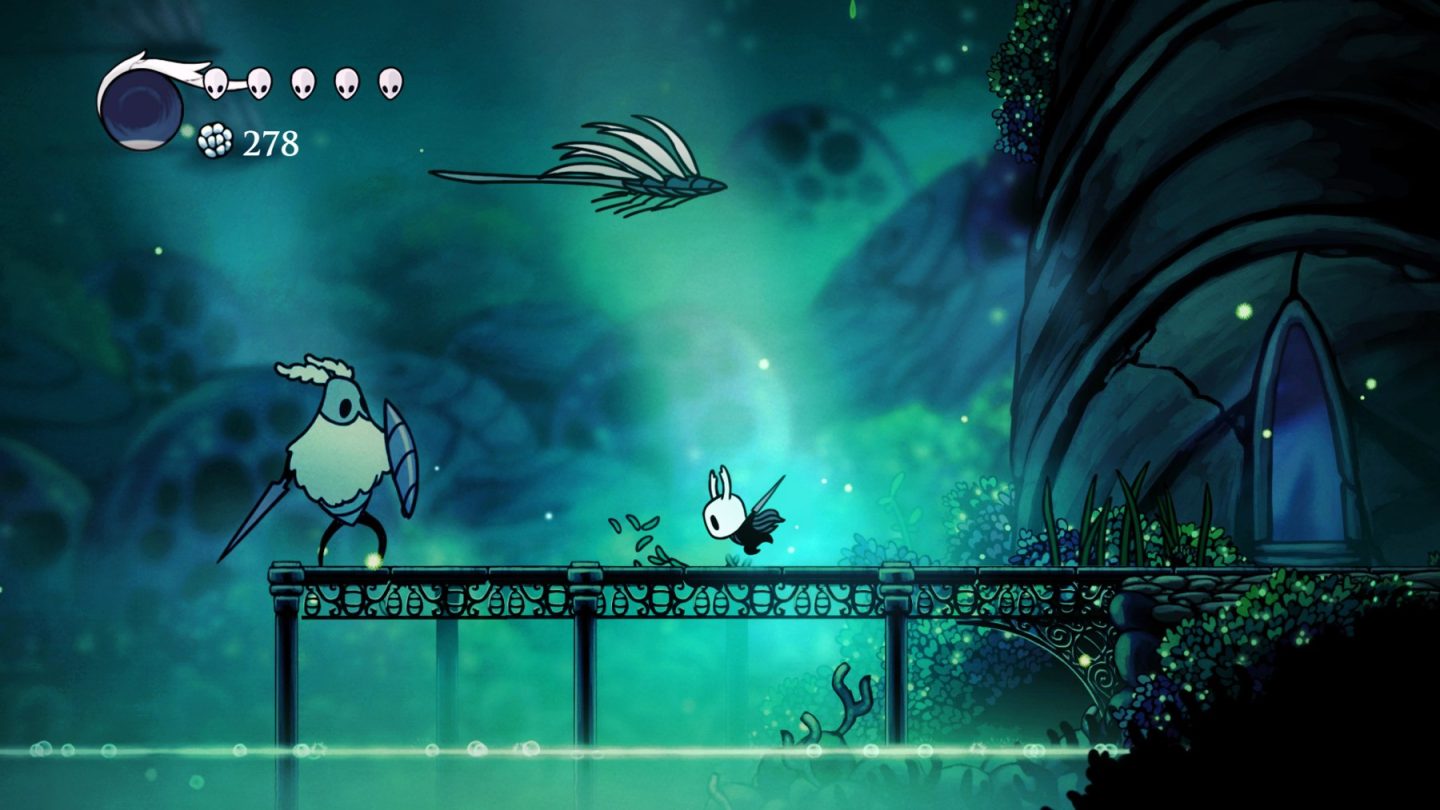
Hollow Knight asks you to learn a place as well as a combat system. The early hours can feel uncertain because a promising route may end at a barrier, a difficult encounter or a drop whose return path is unclear. This guide provides a practical exploration method and a broad early direction. It avoids presenting one sequence as the only legitimate way to discover Hallownest.
Your immediate objective is to make the unfamiliar world readable. A map, a remembered landmark and a reliable return route are all forms of progress. Defeating a boss matters, but so does understanding where its arena sits relative to a bench and a useful shop. The game becomes less intimidating when you connect those pieces instead of treating each room as an isolated challenge.
1. Use Dirtmouth as an orientation point
Spend a moment observing the town before descending. Note where important services are located and read dialogue when a character offers information. These early interactions establish the rhythm of exploring below and returning with knowledge or resources. You do not need to understand the entire kingdom before leaving the opening area. You need a few recognizable anchors.
After descending into the Forgotten Crossroads, notice the relationship between your starting route and the rooms around it. Distinct structures, signs and large vertical spaces make better memory aids than vague impressions of having gone left for a while. When you find a safe place to stop, briefly reconstruct the route you took. That small habit is more reliable than hoping the whole map will become clear automatically.
2. Prioritize navigation tools when they become available
Mapping is part of Hollow Knight's progression rather than a complete overlay handed to you at the start. Speak to the mapmaker when you encounter him and investigate the associated supplies available through town. Read each item's description so that you understand what it adds. Buying a map and expecting every navigational function immediately can create avoidable confusion.
Navigation-related Charms also involve an equipment decision. Consider whether an orientation aid would reduce the time and frustration you currently spend finding your position. A small combat benefit may be less valuable than reliable navigation during an unfamiliar section. You can reconsider the trade-off as your knowledge grows. The right loadout is the one that addresses the present problem, including the problem of being lost.
3. Explore the Crossroads in manageable loops
Rather than following the first route until you are completely disoriented, explore outward from a known connection. At a branching room, choose one direction and remember the alternatives. If you reach a barrier that your current movement cannot overcome, make a note and return. A blocked route is useful information about a future possibility, not evidence that you have misunderstood the whole game.
Try to identify a loop back toward a familiar route before pushing into another unfamiliar branch. This gives you a growing network of connections instead of one long string of uncertain rooms. If a difficult enemy repeatedly consumes your health, consider a different route or a short practice attempt focused only on its attack pattern. Progress does not always require winning the first confrontation you encounter.
4. Learn the relationship between attacks and healing
Your basic attack and your ability to recover are connected through Soul. That creates a useful tension: attacking helps build a resource, but attempting to heal in a poor position can cost more health than it restores. Look for a clear pause in the enemy's behaviour before committing. Standing still beside an active threat is rarely made safe by wanting the healing urgently.
During ordinary encounters, use short attack sequences and create space afterward. Learn the reach of your weapon rather than always moving as close as possible. If an enemy's preparation is visible, wait for the attack and respond during its recovery. A single dependable hit can be a better exchange than an ambitious sequence that ends in contact damage. Survival makes the next room easier to read.
5. Approach the first major encounters as lessons
The early Crossroads contain important encounters that establish how bosses communicate. Watch for the difference between preparation, movement and recovery. If you cannot yet identify a safe window, spend an attempt observing rather than forcing damage. That is useful practice when it leaves you able to describe one pattern more clearly afterward.
When an encounter gives access to a new tool or route, test the new ability in a relatively safe space. Understand its range, cost or movement effect before relying on it in a crowded room. New options can also change the meaning of old barriers. Return to your notes and ask which previously blocked route might now be possible, rather than assuming progress only exists in the newest area.
6. Recognize the broad early direction
A common early journey moves from the Crossroads toward Greenpath, then continues as additional movement options open new connections. Greenpath introduces a different visual rhythm and a new set of hazards. Let that change slow your pace briefly. An approach that worked against one local enemy may not transfer unchanged to another, especially when the environment itself is part of the danger.
Your encounters with Hornet are an important part of this early progression. Focus on learning spacing and the difference between her movement and your opportunity to respond. Later, routes toward the Fungal Wastes and beyond become more meaningful as your movement expands. These are broad orientation points, not instructions to ignore every side path or a guarantee that every doorway must be visited in that order.
7. Manage Geo and recovery deliberately
Carrying resources through an unfamiliar route creates tension. Before a risky outing, consider whether a useful purchase is available and whether the trip has a clear purpose. Spending thoughtfully can reduce the frustration of a later loss. That does not mean buying every object immediately; it means turning accumulated resources into a benefit when the opportunity suits your needs.
After a defeat, resist the urge to sprint through the return route without attention. Recovering from one mistake can lead to another if frustration replaces the method that got you there safely. Re-establish your position, deal with ordinary enemies carefully and decide whether your previous approach to the dangerous room should change. If the route remains too demanding, make the next attempt a controlled recovery trip rather than another full exploration push.
8. Treat benches as planning checkpoints
A bench is an opportunity to reconsider the next outing. Review equipment choices, think about the nearest unexplored branch and decide what success would look like. That might mean reaching a new connection, buying a useful item or simply learning a particular encounter. A defined objective makes it easier to return before the outing becomes an unfocused sequence of risks.
Do not assume that finding a bench makes every nearby route equally safe. It gives you an anchor, not a difficulty guarantee. Use the surrounding rooms to rebuild your map knowledge and identify the most reliable path back. As connections accumulate, long journeys begin to shrink psychologically. Familiarity changes the kingdom even when the physical rooms have not changed at all.
9. Revisit old barriers with a specific question
Once you gain a movement ability, review the places where you previously stopped. Ask what blocked you: height, distance, an enemy, a locked connection or a mechanic you did not understand. Not every new ability solves every problem. Matching the tool to the barrier prevents aimless backtracking and makes revisiting feel like investigation rather than a sweep of every room you have ever seen.
If an area feels exhausting, finish the session at a recognizable checkpoint and leave yourself a short note about the next intention. Returning days later is much easier when you know which branch you meant to investigate. Hollow Knight rewards attention, but it does not require you to hold the entire kingdom in memory between sessions. A practical note can preserve the pleasure of discovery without turning play into administrative work.
A reliable exploration loop
- Begin from a known bench or landmark.
- Choose one branch and notice its alternatives.
- Identify why a barrier stops you.
- Look for a connection back to familiar ground.
- Spend resources when a useful purchase fits the plan.
- Revisit with a new ability and a clear question.
For a fuller assessment of exploration and combat, read our Hollow Knight review. Team Cherry's official game description outlines its connected world, equipment and movement progression. This route is an editorial suggestion designed to preserve discovery, rather than an exhaustive completion checklist.



What is your perspective?
Share a useful observation. Keep spoilers clearly signposted and follow our community guidelines.